Hello, my name is Theresa. I started this blog as a Psychology project. I chose this topic because I have a learning disorder and want to teach people who are in high school and starting college to know that there is help all around them but once one goes off to college/ on one’s own it is mainly up to themselves to get the help they need. Everyone may not know what is out there for help after high school. There is a lot of information in this area and this blog summarizes some of that information.
Wednesday, April 8, 2015
Welcome to My Blog
Hello, my name is Theresa. I started this blog as a Psychology project. I chose this topic because I have a learning disorder and want to teach people who are in high school and starting college to know that there is help all around them but once one goes off to college/ on one’s own it is mainly up to themselves to get the help they need. Everyone may not know what is out there for help after high school. There is a lot of information in this area and this blog summarizes some of that information.

Tuesday, April 7, 2015
Different types of Learning Disabilities
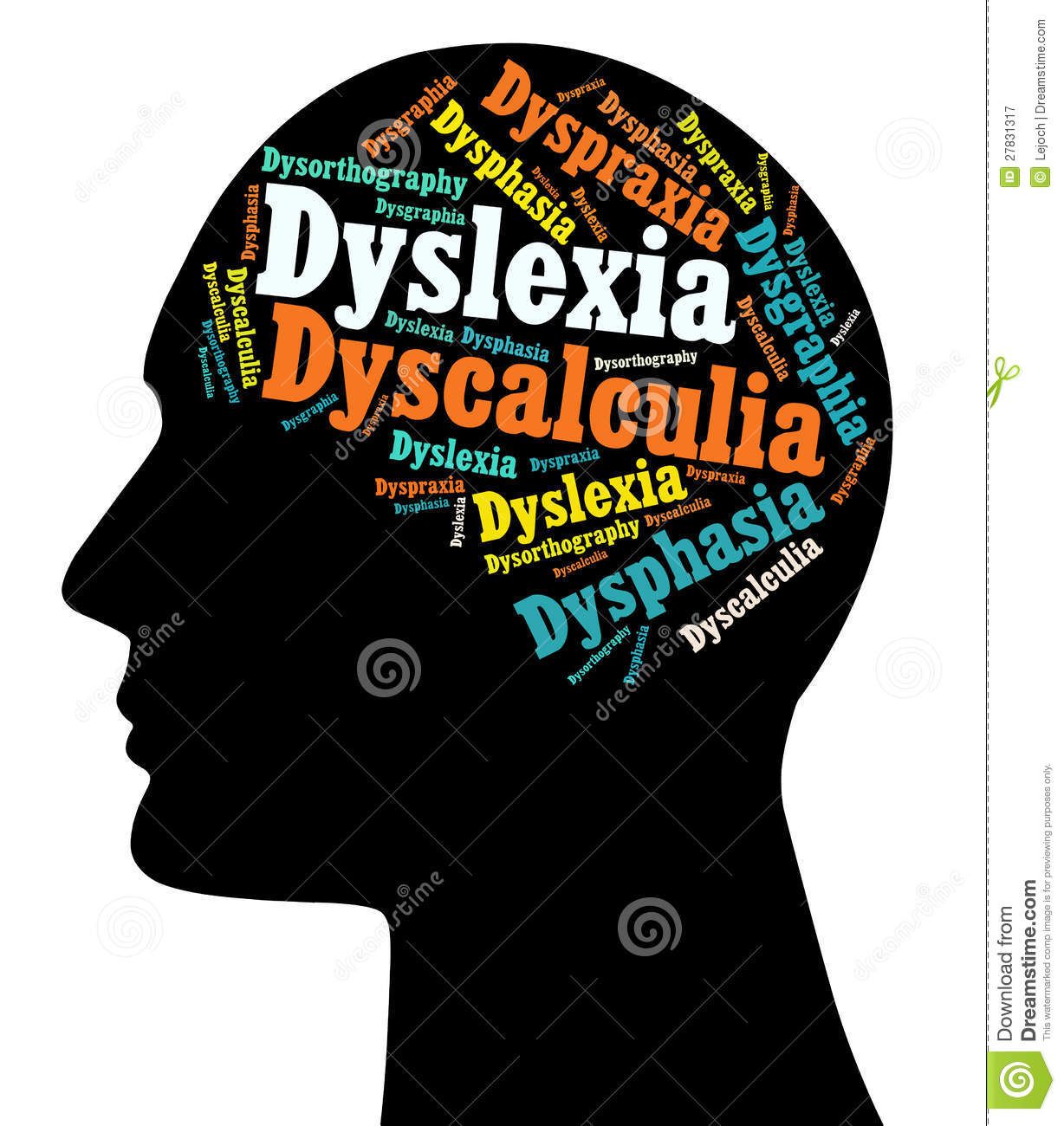 |
| Different types of learning disabilities |
Monday, April 6, 2015
Language Processing Disorder
Language
processing disorder is a specific type of auditory processing disorder. It’s
defined as difficulties in forming sounds, words, and stories where auditory
processing disorder is interpreting the sound from the ear to the brain.[i]
It affects what you say and how you interpret what others are saying. The words
are on the tip of your tongue but you can’t seem to get the words out like you
want to. It can be frustrating because you know what you want to say in your
mind but it doesn’t come out as you want it to. As in social situations, it’s
difficult to keep up with a group’s conversation because you can’t get your
words out fast enough. You wind up saying very little or not at all and may
feel excluded in the conversation.
Some
strategies I found that helpful are using a “Smart Pen” (LiveScribe
recording pen), getting extra time, and working with speech
pathologist. This pen records the person talking at the same time you are
taking notes into a special notepad. When I can’t read my notes or can’t keep
up with note-taking, I can go back to my computer later, where the smart pen
starts up, and listen to the recording exactly where I took any particular
note. I’ve used this in high school and in college very successfully.
Requesting notes from teachers or another classmate also helps in keeping up
with note-taking. My friends figured out that I need a little extra time
(sometimes it creates an awkward pause) to get my thoughts into words.
After a while, it doesn’t become awkward. I also let my teachers know to
give me some extra time during an awkward pause, to let me get my thoughts
out. I have also worked with a speech pathologist for many years, from
Kindergarten through High School. In elementary school, I used a device called Dynavox.
Because my speech and language was severely delayed, I used this device to say
the words for me. As I progressed in my speech, I no longer needed it after 2nd
grade.
Having a
diagnosis with a specific learning disability, helps get the supports you need
to reach your full potential.
Sunday, April 5, 2015
Other Related Developmental Disorders
There are other related developmental disorders that they
are not considered learning disorders. These are often linked to one of the
learning disabilities listed above. Some related developmental disorders are
Attention-Deficit/Hyperactivity Disorder (ADHD), Dysphasia, Dyslalia, Memory
Deficits, Executive Functioning deficits, and Dyspraxia.[1]
Here is a closer look at Dyspraxia.
[1] Abnormal
Psychology and Life pg. 401
Saturday, April 4, 2015
Dyspraxia
Dyspraxia
is a disorder that affects gross and fine motor skills in adults and children.
It can be characterized by difficulties in muscle control. It makes learning
simple things, such as riding a bike, very difficult. A person will have
difficulty in sports and many physical activities. Someone may appear
clumsy, because of poor balance. Someone can be distressed by loud noises
or repeated sounds, like tapping a show. They may have difficulties
putting pieces of a puzzle together. Learning to drive can be take a long
to master and some may not be able to drive at all.
Some
strategies that might help with someone who has dyspraxia are to go to a quiet
place for testing, providing ear plugs for noisy events and try to avoid
concerts. Joining sports through clubs and schools such as swimming and
gymnastics is great to help develop motor skills. Swimming is a great
sport to get all your muscles coordinated. Gymnastics takes a lot of
practice, but has a lot of the gross and fine muscle control development that
is needed.
Dyspraxia
can also affect speech and language since producing speech requires fine muscle
control. This is an example of how Dyspraxia relates to Language Processing
Disorder. You can find more information about dyslexia at the Dyspraxia Foundation.
Friday, April 3, 2015
Applicable Laws in High School and College
Here
are the different laws relating to students with disabilities for high school
and college. Once a child graduates high school, the rules change.
High School
a.
I.D.E.A
(Individuals with Disabilities Education Act) Here is some information on 10
basic steps to learn the process for children by the Center for Parent
Information and Resources.
b.
Section
504, Rehabilitation Act of 1973 - This Act is anti-discrimination for people based
on their disability. The needs of a
student with a disability must be met. Great
Schools is a group that has a Parental
Guide to Section 504 in public schools.
College
a.
Americans
with Disabilities Act of 1990 (A.D.A)
prohibits discrimination based on disability. Colleges and Universities must
make reasonable accommodations for students with disabilities. The student can only expect and equal chance
to do the same work.
b.
Section
504, Rehabilitiona Act of 1973 – The main differences in postsecondary
education is requiring self-advocacy. Pacer Center, Champions for Children with
Disabilities outlines several Questions &Answers.
Thursday, April 2, 2015
Differences between High School and College
The Individual Education Plan
(IEP) and/or 504 plan is used in high school. The IEP is the school’s responsibility until graduation or age 22. Students can be tested by the school
or referred by parent to be eligible for an education plan. In college, a student might need more
documentation for category of disability.
Susan Walter, Transition Consultant in Illinois, describes a summary to support
the transition. One of the biggest
changes is self-advocacy. In high school, the student is identified and
supported by the parents and teachers. Parents typically advocated for the
student or teachers would approach you if they believe you need assistance. In college, it’s the students’ responsibility to
identify themselves as someone who has a disability. They must also request supports and arrange
accommodations with teachers and professors themselves. Professors are usually helpful, but expect
the student to initiate. Parents, who
usually had access to all records in high school, do not have access to student
records without the student’s written permission. Tutoring and support for
studying may have been provided in high school as a service, but tutoring does
not fall under disability services in college.
Students must find their own tutor through the general tutoring services
at the school. You have to management
your assignments independently at college, while the high school schedules are
well structured. Test modifications are included in the IEP in high school that
can change essay’s to multiple choice as well as longer time and unique accommodations.
In college, you are only allowed extended time, test proctors, and quite places
to take the test. Grading and test
format changes are not generally available.
Professors expect you to keep up with the class, using the class
syllabus. Make-up tests are optional to
professors, while they are readily available in high school. College is harder
than high school for someone with a disability, but support disability services
are still available.
Subscribe to:
Comments (Atom)